Electron
An overview of Electron's multi-process architecture, the integration of the Chromium and Node.js event loops, inter-process communication, data sharing, and native capabilities.
Updated
Electron Architecture
Multi-Process Architecture Diagram
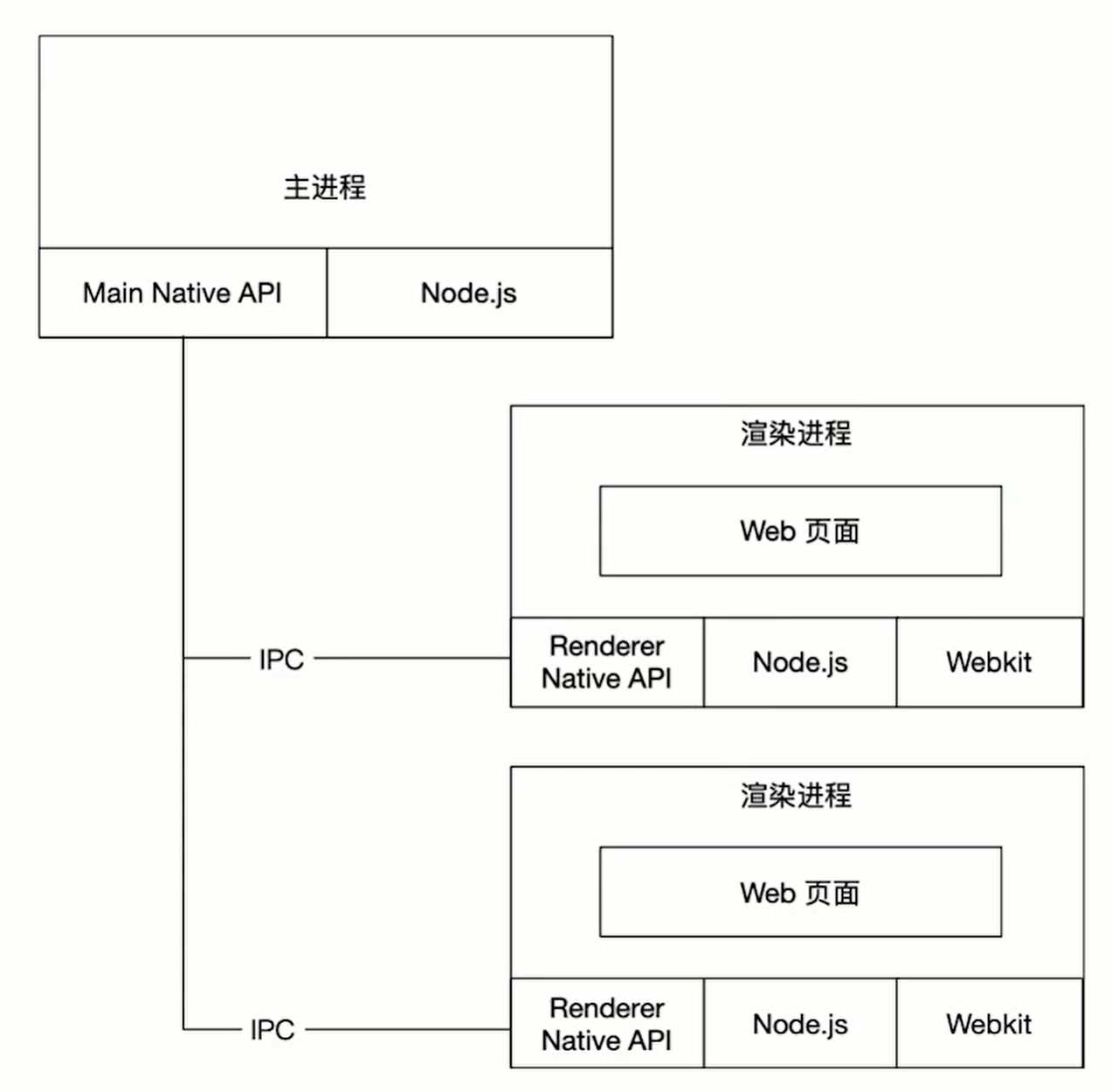
Electron's underlying architecture is based on Chromium; the complete Chromium architecture can be found in the official documentation.
A simplified version of the architecture diagram is as follows:
Event Loop
Electron is based on Chromium and NodeJS, but their event loops and lifecycles are different:
- Chromium: message pump
- NodeJS: libuv
The process of integrating Chromium with NodeJS is shown below:
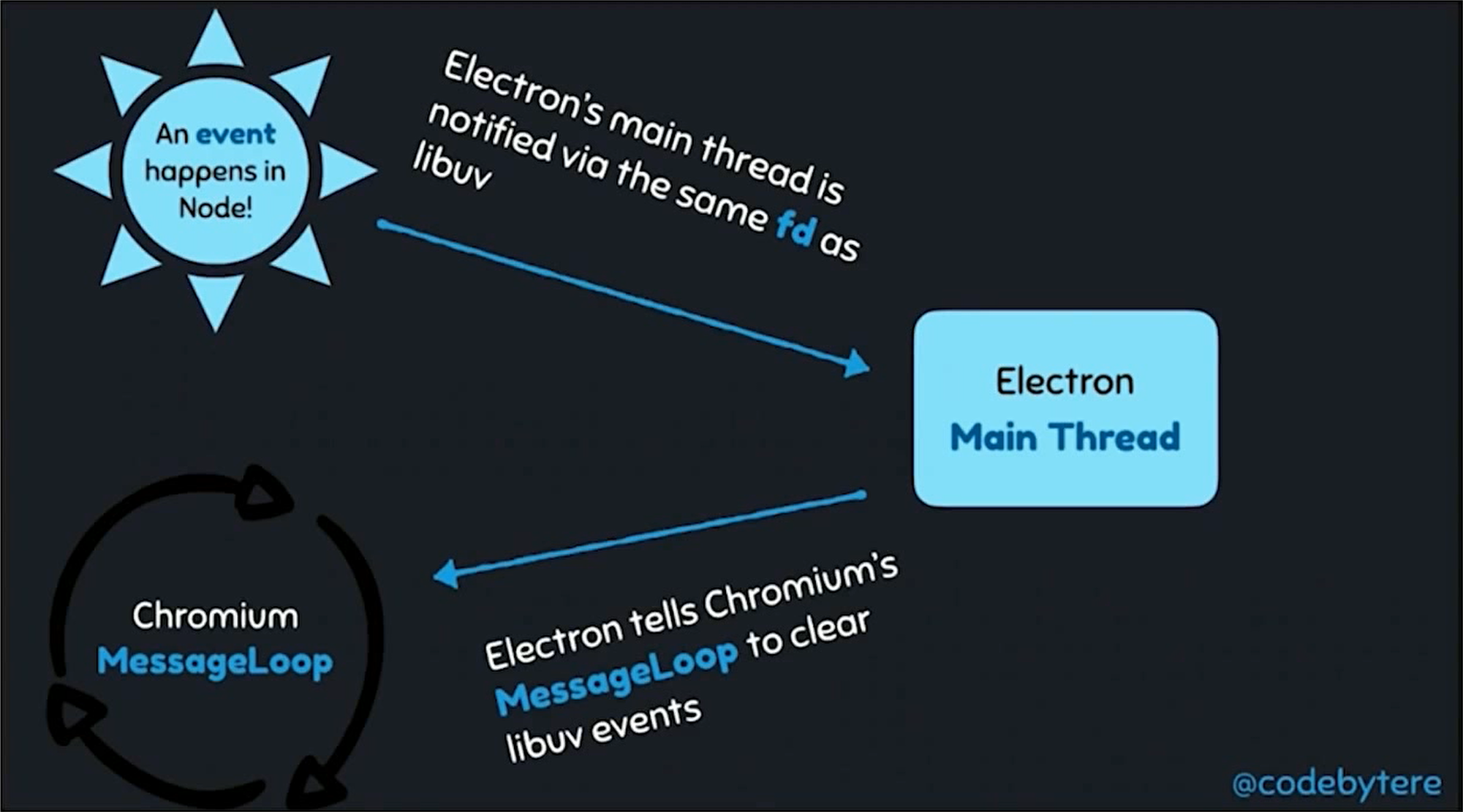
The basic flow is:
- Start a separate safe thread
- The thread polls
backend_fdto get the latest libuv events - Add the events to the Chromium event loop
Inter-Process Communication
render to main
There are two ways for render to notify main: the event-callback style and the Promise style; the Promise style is only supported in Electron 7 and above.
- render uses
ipcRenderer.send(channel, ...args)and main usesipcMain.on(channel, handler); used when render does not need to wait for main to return - render uses
ipcRenderer.invoke(channel, ...args)and main usesipcMain.handle(channel, handler); render can wait for main's response to come back
main to render
For main to notify render, you first need to get the child process's window object, then send the message through window.webContents.send(channel, ...args).
render can receive the event through ipcRenderer.on(channel, ...args).
main does not provide an invoke-equivalent API when sending messages. Generally speaking, main should not continuously wait for render's result; if needed, it can also be implemented through simulation.
render-to-render communication
Electron 5 and above provide ipcRenderer.sendTo, which can send messages from render to render.
In Electron 27, ipcRenderer.sendTo was officially deprecated, replaced by render-to-render communication through MessageChannel.
Before that, messages needed to be forwarded through main.
Data Sharing
Since Electron is also based on Chromium, it also supports localStorage, sessionStorage, indexedDB, and similar capabilities, which can be used for data sharing.
In addition, Electron provides remote for data sharing; underneath it is a synchronous ipc communication, which can easily cause jank and similar issues.
In Electron 9 the remote feature was disabled by default, and it was officially removed in Electron 12, moving to maintenance as a separate plugin.
Native Capabilities
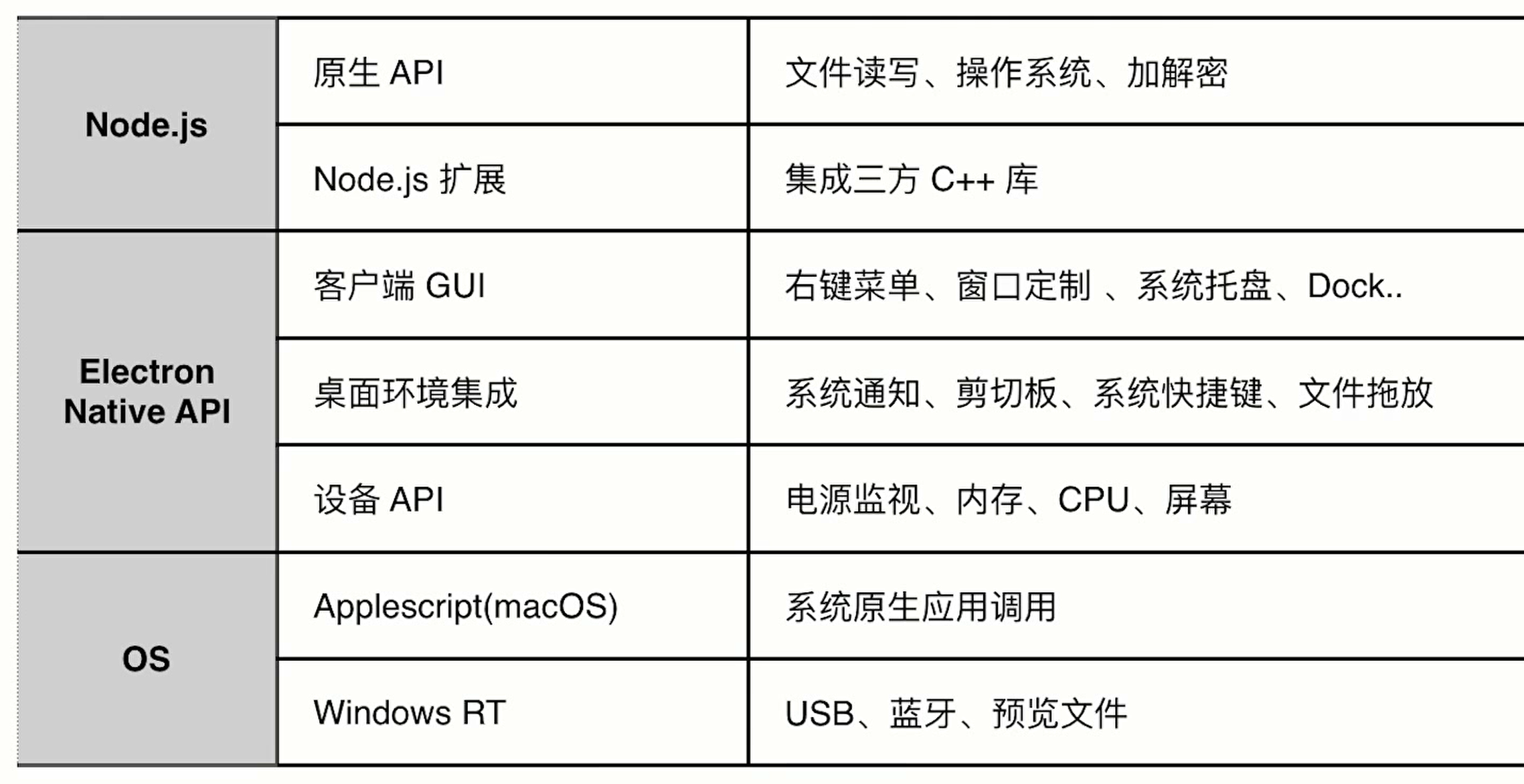
Because Electron runs on the desktop, it can provide capabilities unique to desktop applications, such as GUI and device access.
Meanwhile, because the underlying layer uses NodeJS, richer operations can be implemented through NodeJS's native APIs and addons, reusing existing NodeJS modules.